
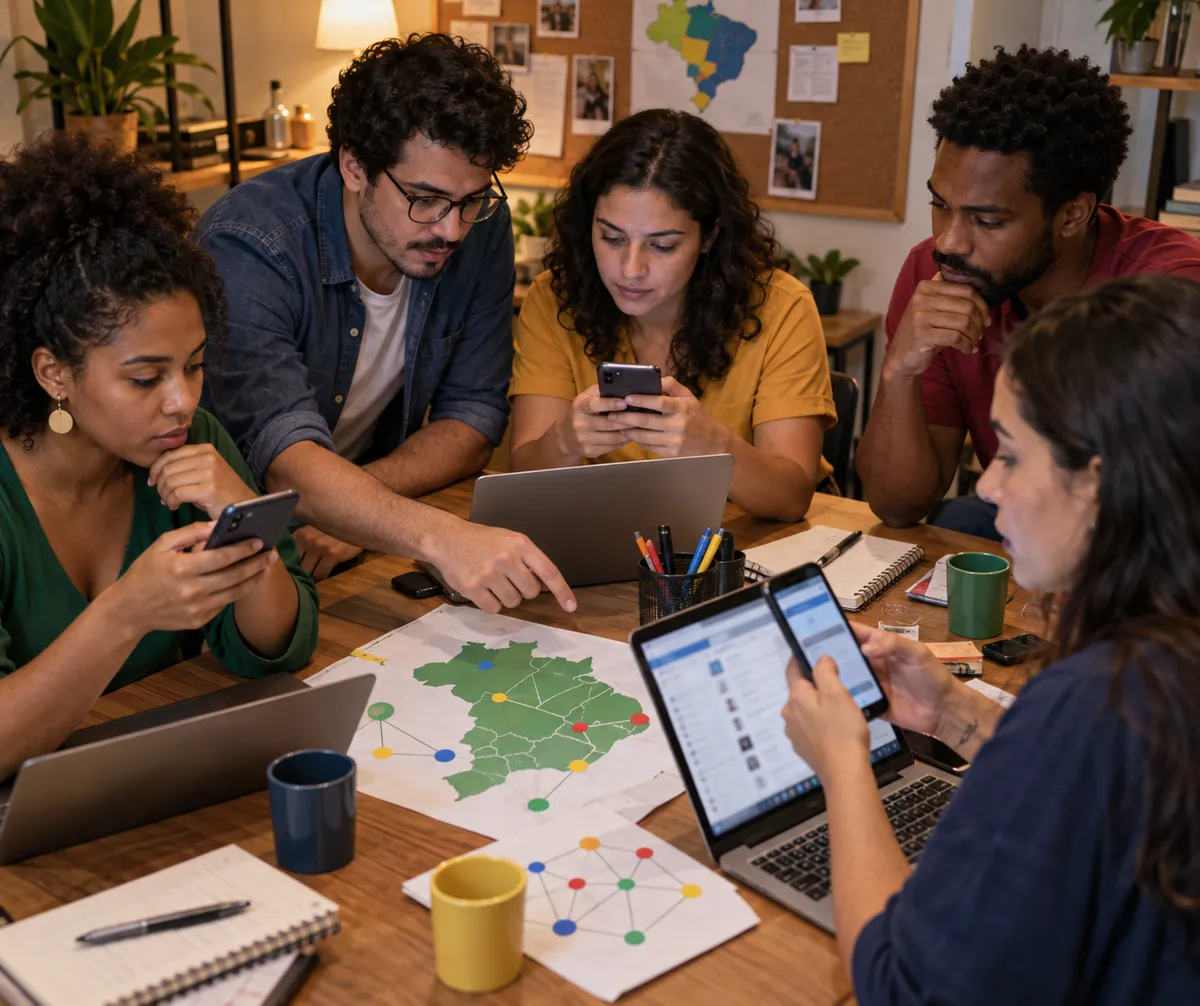
For three weeks in October, Veridiana Cunha became a so-called "soldier" in a digital army fighting to reelect Brazil's leftist President Luiz Inácio Lula da Silva. That's the opening of a CNN report on how Brazil's left took an online organizing playbook pioneered by the right and turned it to its own advantage, a shift CNN says helped Lula win.
This is politics rather than prime-time, but it lands squarely in the territory that streaming-era audiences already know well: how online attention gets built, organized and aimed.
The story: A Volunteer Army, Borrowed Tactics
Per CNN, Brazil's left-wing coalition adopted digital organizing methods that had previously been associated with the right. The tactic at the center is mobilizing grassroots volunteers, the "soldiers," in coordinated online campaigns. CNN's reporting frames those campaigns as crucial to Lula's win.
Cunha is the human face of that story. By CNN's account, she signed on for a stretch of about three weeks in October. The "soldier" label is the movement's own language, and it tells you how these operations see themselves: less as a mailing list, more as a unit with a mission.
The Take: Every Hit Format Gets a Remake
What's striking here isn't that a campaign used social media. Everyone does. It's that the left, by CNN's telling, studied what had worked for its opponents and ran the same play with its own volunteers.
If you follow television, this will feel familiar. A format proves itself on one network, and within a season the rivals are rolling out their own version with a different cast and a slightly different tone. Nobody calls it theft; it's called a trend. Politics, it turns out, has its own development slate.
That's analysis, not reporting, but the logic holds. Once a tactic is visible, it's available to everyone. The advantage of being first lasts only until the other side takes notes.
Why Volunteers Are the Interesting Part
The most telling detail in the report is the foot soldier model itself. A decentralized network of ordinary people, each doing a few weeks of online work, is a very different thing from a campaign that buys airtime and hopes for the best. It resembles the way fandoms operate: distributed, enthusiastic, self-organizing, fluent in the platform's native language.
It's hard not to wonder what that means for traditional party machinery. CNN's report points to a campaign model where volunteer energy does work that institutions once did. Whether that's a durable shift or one cycle's novelty is not something the report settles, and it would be premature to claim otherwise.
What Travels, and What Doesn't
The broader point, as CNN frames it, is that global elections increasingly hinge on digital strategy and social media influence. Brazil offers a case study in how a movement can compete by adapting an opponent's methods rather than inventing from scratch.
A few caveats worth keeping in mind:
- One election is not a law of nature. A winning tactic in Brazil doesn't guarantee the same result in the U.S. or Europe, where platforms, laws and political cultures differ.
- Copying cuts both ways. If the left can adopt the right's playbook, the right can adopt whatever the left improves on it.
- The human story matters. Cunha's three weeks as a soldier is a reminder that these "armies" are made of individual volunteers, not just algorithms.
The Sequel Problem
The lesson of any successful format is that it gets cloned until the audience tires of it. The same may be true of the digital soldier model. Volunteers recruited for a three-week push are enthusiastic; volunteers recruited for the fifth consecutive cycle may be a harder sell, and voters who see the same online tactics from every side may tune them out.
For now, the story CNN tells is of a campaign that learned from the other side's hits and delivered its own version, with Lula winning. The next season is already being written, and by now everyone has read the script.